Runes Generator (Futhark Text Converter)
Type normal English text below to convert your letters into authentic historical Elder Futhark, Younger Futhark (Viking Age), and Anglo-Saxon Futhorc runes. 1-click copy for names, bios, tattoos, and fantasy lore.
Save your translated runes as a sharp graphic banner with gold inscription for Instagram, gaming avatars, or tattoo stencils.
Elder Futhark Rune Directory
Click any individual rune card below to instantly copy the glyph to your clipboard or examine its traditional Old Norse phonetic sound and cosmic meaning.
Runes Translator - Copy & Paste Generated Runic Names & Nicknames (ᚠᚢᚦᚨᚱᚲ·ᚱᚢᚾᛖᛊ)
The Runes Generator is a specialized linguistic tool that transliterates standard English and Latin letters into historical Germanic and Norse runic scripts. Rather than relying on inaccurate generic fonts, this tool converts your characters into authentic Unicode Runic block characters (U+16A0 through U+16FF). This guarantees that your generated runic names, Viking bios, Discord handles, and tattoo inscriptions display cleanly across iOS, Android, Windows, Mac, and web platforms.
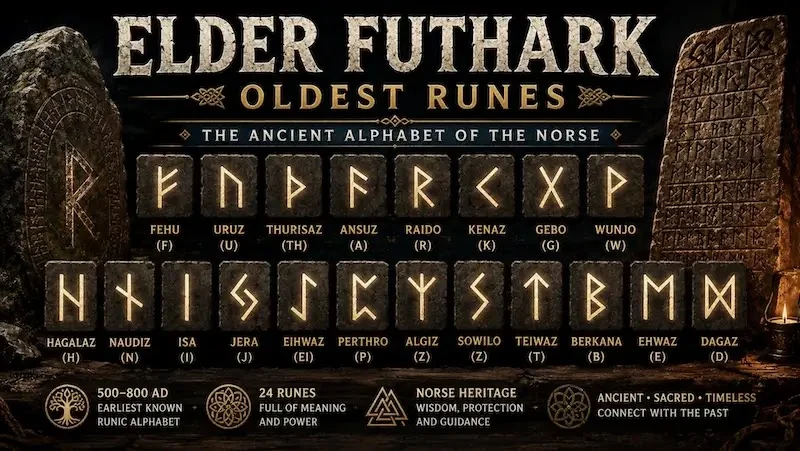
Elder Futhark: The Earliest Germanic Runic System (24 Runes)
The Elder Futhark is the oldest verified runic alphabet. Attested across Northern Europe from approximately 150 CE to 800 CE, it contains 24 distinct runes traditionally structured into three sacred groups of eight, known as aettir (Freyr’s Aett, Hagalaz’s Aett, and Týr’s Aett). Designed primarily to be carved into dense media such as wood, stone, bronze, and bone, Elder Futhark runes consist exclusively of vertical staves and sharp diagonal branches, avoiding horizontal or circular strokes that could split wood grain along its fiber.
| Rune | Name | Latin Letter | Approximate Sound | Cosmic Meaning | Quick Copy |
|---|---|---|---|---|---|
| ᚠ | Fehu | F | /f/ | Mobile Wealth, Cattle, Prosperity | |
| ᚢ | Uruz | U / V | /u/ | Wild Ox (Aurochs), Strength, Vitality | |
| ᚦ | Thurisaz | Þ (TH) | "th" as in thing | Giant, Thor's Hammer, Defensive Force | |
| ᚨ | Ansuz | A | /a/ | Odin, Divine Voice, Wisdom, Breath | |
| ᚱ | Raidō | R | /r/ | Riding, Journey, Chariot, Cosmic Law | |
| ᚲ | Kaunan | K / C / Q | /k/ | Torch, Ulcer/Fire, Craftsmanship | |
| ᚷ | Gebo | G | /g/ | Gift, Partnership, Generosity, Exchange | |
| ᚹ | Wunjō | W | /w/ | Joy, Fellowship, Harmony, Glory | |
| ᚺ | Hagalaz | H | /h/ | Hail, Tempest, Destructive Transformation | |
| ᚾ | Nauthiz | N | /n/ | Need, Constraint, Necessity, Endurance | |
| ᛁ | Isaz | I / Y | /i/ | Ice, Stillness, Static Energy, Clarity | |
| ᛃ | Jera | J / Y | /j/ ("y" in year) | Harvest, Good Season, Natural Cycle | |
| ᛇ | Eihwaz | Ï / EI | /iː/, /ei/ | Yew Tree, Tree of Life, Endurance | |
| ᛈ | Perthro | P | /p/ | Dice Cup, Fate, Mystery, Hidden Things | |
| ᛉ | Algiz | Z / R | /z/ | Elk, Protection, Shielding, Sanctuary | |
| ᛊ | Sowilō | S | /s/ | Sun, Victory, Radiance, Life Force | |
| ᛏ | Tiwaz | T | /t/ | Týr (God of War), Honor, Justice | |
| ᛒ | Berkanō | B | /b/ | Birch, Rebirth, Fertility, Healing | |
| ᛖ | Ehwaz | E | /e/ | Horse, Momentum, Trust, Loyalty | |
| ᛗ | Mannaz | M | /m/ | Humanity, Self, Kinship, Intelligence | |
| ᛚ | Laguz | L | /l/ | Water, Lake, Intuition, Ocean Depths | |
| ᛜ | Ingwaz | NG | /ŋ/ in ring | Ing (God of Earth), Potential, Seed | |
| ᛞ | Dagaz | D | /d/ | Day, Awakening, Dawn, Breakthrough | |
| ᛟ | Othala | O | /o/ | Ancestral Land, Heritage, Home, Estate |
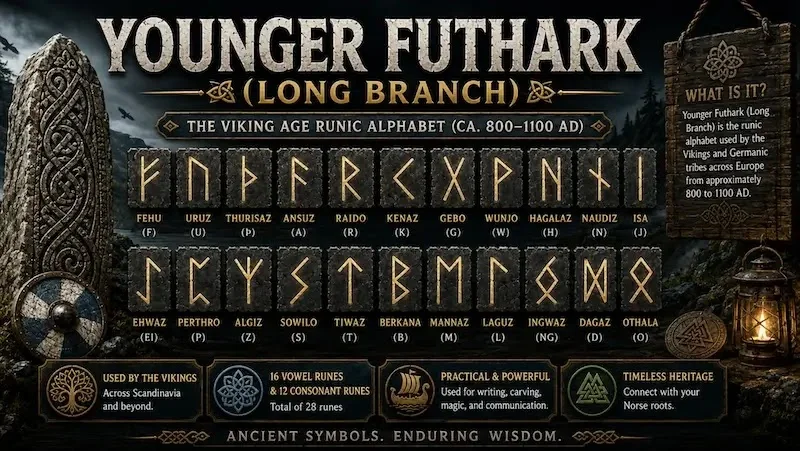
Younger Futhark (Long Branch): The True Viking Age Alphabet (16 Runes)
During the dawn of the Viking Age (around 800 CE), the Old Norse language underwent profound phonetic shifts. Paradoxically, while the spoken language added vowel sounds, Scandinavians condensed their writing system down from 24 runes to just 16 runes. This consolidated script is known as Younger Futhark. The Long Branch variety (often called Danish runes) is the script seen carved into monumental Viking runestones across Denmark, Sweden, and Norway. Because fewer runes existed, a single rune character stood for multiple voiced and unvoiced consonant pairs (for instance, ᛏ represented both /t/ and /d/, while ᛒ represented both /b/ and /p/).
| Rune | Name | Latin Sounds | Viking Age Context | Copy |
|---|---|---|---|---|
| ᚠ | Fé | F / V | Livestock, Gold, Wealth | |
| ᚢ | Úr | U / O / V / W | Drizzle, Slag, Raw Power | |
| ᚦ | Þurs | Þ (TH) | Giant (Thurs), Menacing Obstacle | |
| ᚬ | Óss | O / A / Æ | Aesir Gods, Chieftain, Divine Word | |
| ᚱ | Reið | R | Riding, Horseback Travel | |
| ᚴ | Kaun | K / G / C | Sore, Ulcer, Hearth Flame | |
| ᚼ | Hagall | H | Hail, Cold Storm | |
| ᚾ | Nauðr | N | Constraint, Distress, Fate | |
| ᛁ | Íss | I / E | Ice, Frozen River | |
| ᛅ | Ár | A | Good Year, Prosperity, Harvest | |
| ᛋ | Sól | S / Z | Sun, Radiance | |
| ᛏ | Týr | T / D | Týr, High God of Valor | |
| ᛒ | Bjarkan | B / P | Birch Twig, New Growth | |
| ᛘ | Maðr | M | Human, Person, Mortal Man | |
| ᛚ | Lögr | L | Water, Waterfall, Cascade | |
| ᛦ | Ýr | R / Y (Coda-R) | Yew Bow, Defensive Wood |
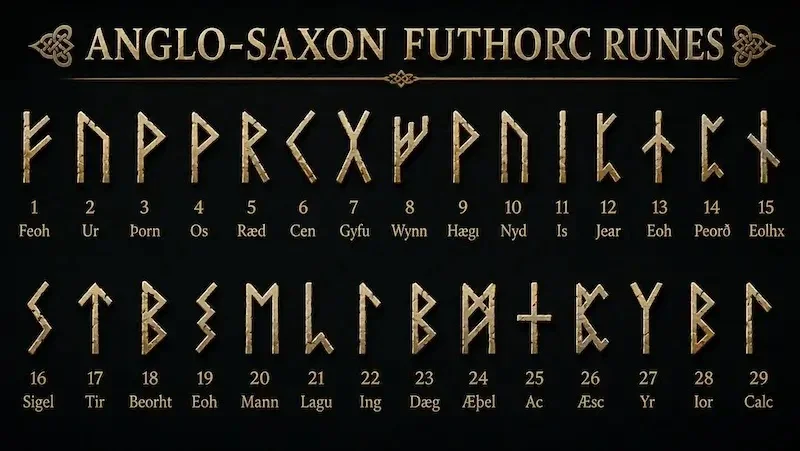
Anglo-Saxon Futhorc: Early English & Frisian Runes (33 Runes)
When Angles, Saxons, and Jutes sailed to the British Isles in the 5th century CE, they brought the Elder Futhark with them. As Old English branched away from continental Germanic dialects, its rich inventory of diphthongs and vowels required additional letters. The result was the Anglo-Saxon Futhorc, which expanded from 24 up to 28, and eventually 33 runes. Historical artifacts like the Ruthwell Cross and the famous bone Franks Casket showcase this unique Insular runic tradition.
Popular Runes Examples: Nicknames, Gaming IDs & Bio Ideas
Below are popular nicknames and inspirational expressions transliterated into authentic Elder Futhark runes for use on Steam, Discord, PUBG, Instagram bios, and fantasy campaigns:
| English Name | Elder Futhark Translation | Younger Viking Runes | Quick Copy |
|---|---|---|---|
| Shadow | ᛊᚺᚨᛞᛟᚹ | ᛋᚼᛅᛏᚢᚢ | |
| Ghost | ᚷᚺᛟᛊᛏ | ᚴᚼᚢᛋᛏ | |
| Wolf | ᚹᛟᛚᚠ | ᚢᚢᛚᚠ | |
| Raven | ᚱᚨᚢᛖᚾ | ᚱᛅᚢᛁᚾ | |
| Dragon | ᛞᚱᚨᚷᛟᚾ | ᛏᚱᛅᚴᚢᚾ | |
| Warrior | ᚹᚨᚱᚱᛁᛟᚱ | ᚢᛅᚱᚱᛁᚢᚱ | |
| King | ᚲᛁᛜ | ᚴᛁᚾᚴ | |
| Queen | ᚲᚢᛖᛖᚾ | ᚴᚢᛁᛁᚾ | |
| Phoenix | ᛈᚺᛟᛖᚾᛁᚲᛊ | ᛒᚼᚢᛁᚾᛁᚴᛋ |
Runic Quotes & Inspirational Messages
| English Message | Elder Futhark Runic Translation | Copy |
|---|---|---|
| I Love You | ᛁ·ᛚᛟᚹᛖ·ᛁᛟᚢ | |
| Stay Strong | ᛊᛏᚨᛁ·ᛊᛏᚱᛟᚾᚷ | |
| Forever Together | ᚠᛟᚱᛖᚹᛖᚱ·ᛏᛟᚷᛖᚦᛖᚱ | |
| Never Give Up | ᚾᛖᚹᛖᚱ·ᚷᛁᚹᛖ·ᚢᛈ | |
| Be Brave | ᛒᛖ·ᛒᚱᚨᚹᛖ | |
| Fear Nothing | ᚠᛖᚨᚱ·ᚾᛟᚦᛁᚾᚷ |
Instagram Bio Aesthetic Ideas Using Runic Text
⚡ Work hard. Stay humble.
🎯 Driven by purpose.
🔥 Success is the only option.
🎯·ᛞᚱᛁᚢᛖᚾ·ᛒᛁ·ᛈᚢᚱᛈᛟᛊᛖ.
🔥·ᛊᚢᚲᚲᛖᛊᛊ·ᛁᛊ·ᚦᛖ·ᛟᚾᛚᛁ·ᛟᛈᛏᛁᛟᚾ.
🤍 Living with intention.
🌿 Protecting my peace.
✨ Simple. Happy. Free.
🌿·ᛈᚱᛟᛏᛖᚲᛏᛁᛜ·ᛗᛁ·ᛈᛖᚨᚲᛖ.
✨·ᛊᛁᛗᛈᛚᛖ.·ᚺᚨᛈᛈᛁ.·ᚠᚱᛖᛖ.
🖤 Silent moves. Loud results.
💎 Confidence is my armor.
🚀 Watch me conquer.
💎·ᚲᛟᚾᚠᛁᛞᛖᚾᚲᛖ·ᛁᛊ·ᛗᛁ·ᚨᚱᛗᛟᚱ.
🚀·ᚹᚨᛏᚲᚺ·ᛗᛖ·ᚲᛟᚾᚲᚢᛖᚱ.
Frequently Asked Questions About Runes & Translators
1. What is the difference between Elder Futhark and Younger Futhark?
2. Is this tool a literal Old Norse translator?
3. Why do ancient runic inscriptions use middle dots (·) instead of spaces?
4. Can I paste these runes into Instagram, TikTok, Discord, and games?
U+16A0–U+16FF). Because they are native text characters rather than custom images or fonts, you can paste them into social media bios, nicknames, chat messages, gaming handles, and word processing documents.